
Philosophy is sometimes introduced as a museum of difficult names: Plato, Aristotle, Descartes, Kant. It can also appear to be a collection of questions no one can answer. Both impressions miss its most useful meaning. Philosophy is the disciplined examination of our most basic questions, concepts, and reasons. It asks not only what we believe, but what we mean, why we believe it, and what else follows if it is true.
You already do philosophy whenever you ask whether fairness means equal treatment or treatment according to need; whether a spiritual experience counts as knowledge; whether a person remains the same through radical change; or whether beauty is discovered or invented. The choice is not between doing philosophy and avoiding it. The choice is between examining our assumptions and letting them operate unseen.
Questions beneath questions
Suppose two people disagree about a historical claim. At first they may argue about documents and dates. Soon, however, deeper questions appear: What makes a source trustworthy? Does the absence of evidence count as evidence of absence? How should testimony be weighed? Those are epistemological questions. Or suppose they disagree about moral responsibility. Beneath the dispute may lie questions about freedom, intention, human nature, and what makes a person the same person over time. Those are ethical and metaphysical questions.
Philosophy moves downward toward these foundations and outward toward their consequences. This does not mean that philosophers float above evidence. Good philosophy is answerable to experience, science, history, language, and lived moral reality. It means that evidence never interprets itself. We need concepts and standards for deciding what evidence bears on a question and what conclusions it supports.
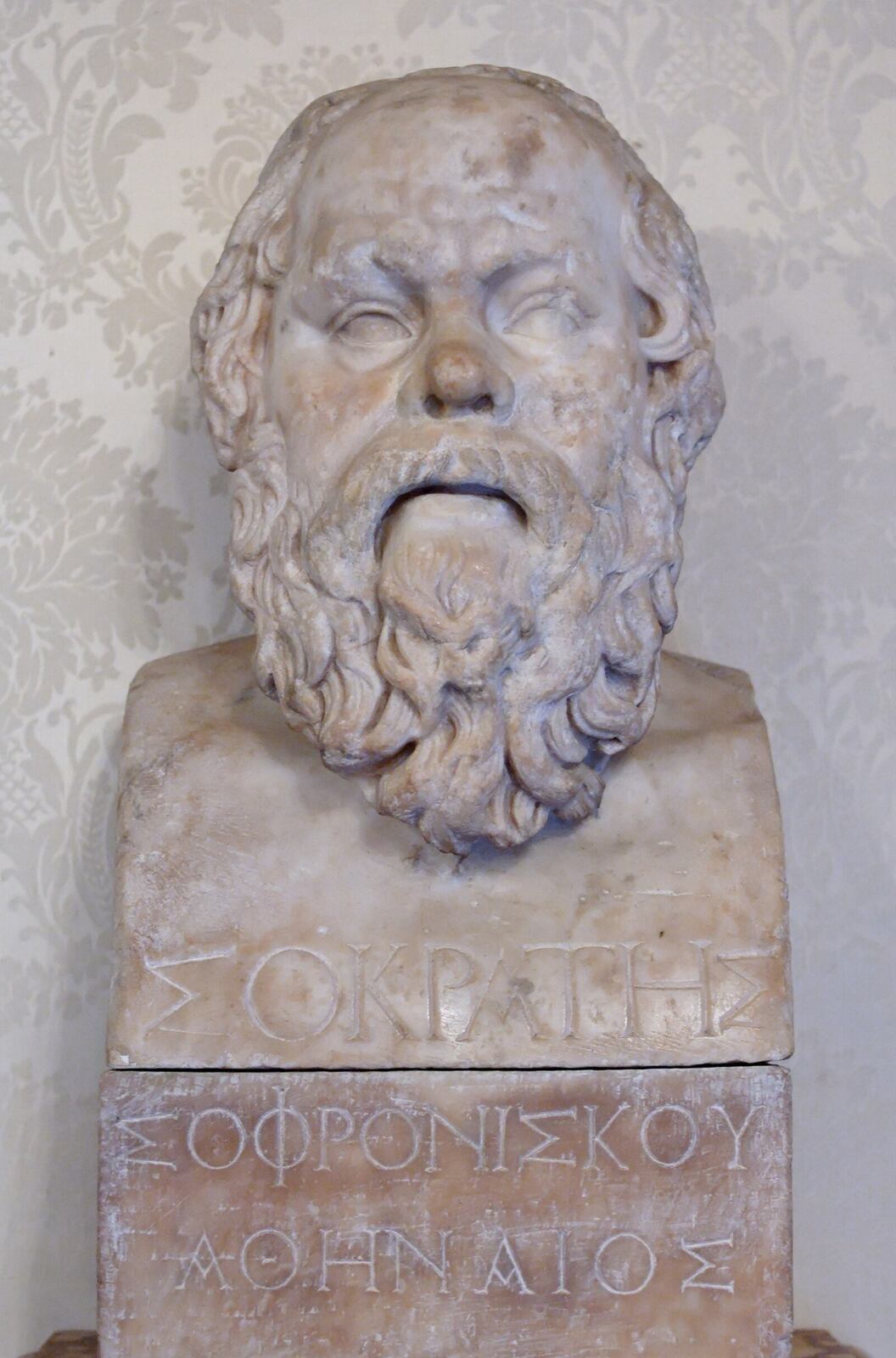
Socrates, as portrayed in Plato’s dialogues, often begins by asking for a definition. What is courage? What is justice? His conversation partners offer examples; Socrates asks what makes all the examples instances of the same thing. This method can be irritating, but it reveals a common problem: we use important words competently until disagreement forces us to say what we mean.
A map of the branches
The branches of philosophy are not sealed rooms, but they provide a useful map.
Logic studies good inference. It asks when a conclusion follows from premises and how arguments go wrong. A deductively valid argument cannot have true premises and a false conclusion, though validity alone does not guarantee that its premises are true. Informal logic also examines ambiguity, weak analogy, circular reasoning, false dilemmas, and other failures that occur in ordinary speech.
Epistemology studies knowledge and justified belief. What is the difference between knowing and luckily guessing? How much should we trust perception, memory, experts, communities, or spiritual experience? When is doubt reasonable? Epistemology matters because nearly everything we know depends partly on other people. Radical self-reliance is impossible; responsible trust is essential.
Metaphysics asks what reality is fundamentally like. What kinds of things exist? What is causation? Are minds reducible to brains? What are time, possibility, identity, and freedom? These questions may sound remote, yet they shape debates about resurrection, agency, divine action, and personal responsibility.
Ethics asks what makes actions right, lives good, and people virtuous. Some theories emphasize duties, others consequences, virtues, relationships, or divine commands. Ethical philosophy does not make moral life easy. It gives us ways to recognize what a difficult case is difficult about.
Social and political philosophy investigates authority, justice, rights, liberty, community, and the common good. Aesthetics studies beauty, art, taste, and interpretation. Philosophy of religion, philosophy of science, philosophy of language, and other fields bring foundational analysis to particular domains.
The branches constantly intersect. A claim about what human beings are affects an argument about how they should be treated. A view of testimony affects which histories we accept. An account of language shapes how we read scripture. A philosophical map is valuable not because every question fits one box, but because it helps us notice which kinds of work a question demands.
Three habits of philosophical thinking
First, clarify the claim. Replace a vague disagreement with a sentence specific enough to test. Ask what key words mean in this context. Distinguish related claims: saying that an event is possible is not saying it is probable; explaining a belief is not the same as disproving it.
Second, reconstruct the reasons. An argument is not a quarrel. It is a set of premises offered in support of a conclusion. State the strongest plausible version, especially when you disagree. Then ask two separate questions: If the premises were true, would the conclusion follow? And should we accept the premises?
Third, search for alternatives and implications. Many disputes are trapped by a false dilemma: either faith or reason, objectivity or total relativism, tradition or freedom. Ask whether the offered alternatives exhaust the possibilities. Then test a view beyond the case that made it attractive. What else would follow? Can those consequences be accepted consistently?
Philosophy without arrogance
Philosophy has limits. A flawless argument cannot compensate for false premises, and some premises must be learned from observation, testimony, or experience. Human reasoning is also performed by people with loyalties, fears, and blind spots. Cleverness can rationalize almost anything when its goal is victory.
For religious learners, philosophy can seem either threatening or irresistibly useful. Both reactions deserve restraint. Philosophy cannot mechanically prove every commitment of faith, nor does it automatically dissolve faith. It can clarify what a doctrine claims, distinguish a genuine contradiction from a mystery, reveal where an argument overreaches, and help believers understand alternatives. Latter-day Saint thought has always made claims about embodiment, agency, matter, history, and revelation—claims with philosophical dimensions whether or not we use the label.
Thinking philosophically, then, means becoming responsible for your reasons, not suspicious of everything you encounter. The aim isn’t permanent hesitation or a debater’s win. It’s a more truthful relation to reality: concepts clear enough to communicate, arguments strong enough to bear weight, and conclusions held with the confidence they’ve actually earned.
Readings
- Internet Encyclopedia of Philosophy, “Metaphilosophy”, especially its opening questions about what philosophy is and how it should be practiced.
- Plato, Euthyphro (Project Gutenberg).
- Stanford Encyclopedia of Philosophy, “Epistemology”.